Why Disaster Preparedness Isn’t Optional Anymore
Published by USA Disaster Supply | USADisasterSupply.com
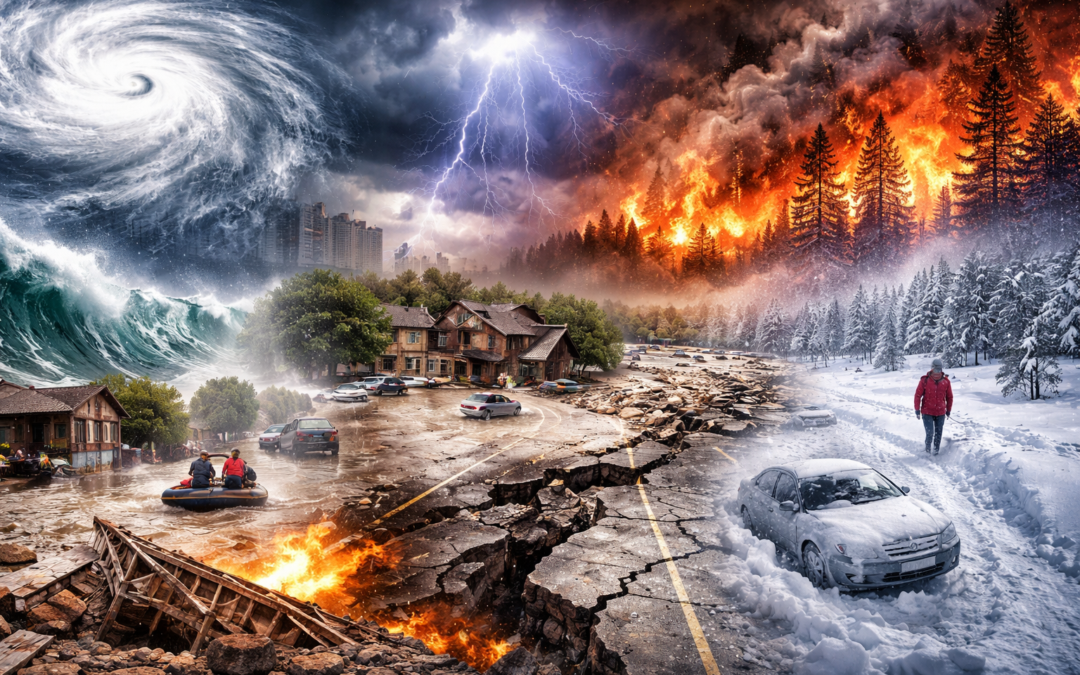
When people think about disaster preparedness, many picture a worst-case scenario that will never happen to them. Then a hurricane makes landfall three days ahead of schedule. A wildfire jumps a containment line overnight. A winter storm knocks out power for two weeks. And suddenly, “it won’t happen to me” becomes “I wasn’t ready.”
The hard truth is that disasters — natural and man-made — are not rare events. They are predictable, recurring, and increasingly severe. The question is no longer if your community will face an emergency. It’s when — and whether you’ll be ready when it does.
The Numbers Don’t Lie
According to FEMA, nearly 60% of Americans have not practiced or prepared an emergency plan for their household. Yet in 2023 alone, the United States experienced 28 separate billion-dollar weather and climate disasters — the highest number ever recorded in a single year.
Hurricanes. Tornadoes. Wildfires. Flooding. Ice storms. Earthquakes. These aren’t abstract threats. They are events that displace families, shut down hospitals, cut off clean water supplies, and overwhelm emergency response systems — often simultaneously.
When a disaster strikes at scale, first responders are stretched thin. FEMA and local emergency management agencies do extraordinary work, but the reality is that government resources take time to mobilize. The first 72 hours after a disaster declaration are almost always the most critical — and the most dangerous — for those who are unprepared.
What “Prepared” Actually Means
Preparedness isn’t about fear. It’s about control. When you’re prepared, you make rational decisions instead of panicked ones. You protect your family, your property, and your community without depending entirely on an already-overwhelmed system.
At a minimum, genuine preparedness means having:
1. A 72-Hour Emergency Water Supply Water is your most critical resource. Municipal water systems fail during earthquakes, floods, and infrastructure outages. FEMA recommends one gallon of water per person per day — but in high-heat emergencies or for households with medical needs, that number goes up fast. Shelf-stable, sealed emergency water like Aqua Emergency’s 50-year certified aluminum cans eliminate the need for rotation and ensure clean, pure water is available when you need it most.
2. Shelf-Stable Emergency Food Grocery stores empty within hours of a disaster warning. Power outages make refrigerated food unsafe within days. Military-grade MREs (Meals Ready to Eat) — like MRE Star’s M-018H with 1,200 calories per meal and a 36-month shelf life — require no cooking, no water, and no refrigeration. They are designed precisely for the conditions that follow a disaster.
3. Flood Protection for Your Property Flooding is the most common and most costly natural disaster in the United States. For homeowners, businesses, and critical infrastructure operators, deployable flood barriers like the Garrison Hammerhead™ and Mayon Modular systems can be set up in minutes without tools — protecting structures that would otherwise suffer catastrophic, uninsured damage.
4. A Family Emergency Plan Know your evacuation routes. Know where to meet if you’re separated. Have paper copies of critical documents — IDs, insurance policies, medical records — in a waterproof bag. Have a communication plan for when cell networks go down.
5. A 30-Day Mindset, Not Just 72 Hours FEMA’s 72-hour guideline is a baseline, not a ceiling. Events like Hurricane Maria in Puerto Rico, the 2021 Texas winter storm, and extended wildfire seasons have shown that communities can be cut off from supply chains for weeks or months. True preparedness means building toward a 30-day supply of essentials for your household or facility.
The Cost of Not Being Ready
The financial and human cost of being unprepared is staggering. After Hurricane Katrina, the average displaced household lost an estimated $3,500 in spoiled food and emergency expenses in the first week alone — expenses that proper pre-positioning could have dramatically reduced or eliminated.
For businesses, the cost is even higher. According to FEMA, 40% of small businesses never reopen after a major disaster. Those that do often spend months recovering from damage that could have been mitigated with relatively modest preparedness investments.
For public agencies — schools, hospitals, utilities, emergency shelters — the stakes are even greater. FEMA’s Public Assistance program reimburses 75–100% of eligible emergency protective measures, but only for agencies that procured FEMA-compliant, properly documented supplies in advance. Pre-positioned, audit-ready inventory isn’t just smart — it’s the difference between getting reimbursed and absorbing the loss entirely.
Preparedness Is a Community Responsibility
Individual preparedness matters enormously — but it doesn’t exist in a vacuum. When families, schools, businesses, and local governments are all prepared, the entire community becomes more resilient. Emergency responders can focus on those with the greatest need. Shelters don’t become overwhelmed. Supply chains have more time to recover.
This is why county emergency management offices, school districts, hospitals, and public utilities are increasingly investing in pre-positioned emergency supply contracts — not as a reaction to disaster, but as a standing policy of community resilience.
Where to Start
You don’t have to build your preparedness plan overnight. Start with the basics:
- This week: Order a case of emergency water and a supply of shelf-stable food. Store them somewhere accessible. Done.
- This month: Build a family emergency plan. Identify your evacuation routes. Assemble a go-bag with documents, medications, and a flashlight.
- This quarter: Assess your property’s flood risk. Review your insurance coverage. Consider whether your business or organization has adequate emergency supply on hand.
Every step you take now is a step you won’t have to scramble to take in the dark, under stress, when it actually matters.
USA Disaster Supply — Built in the USA. Ready for Any Storm.
At USA Disaster Supply, we supply American-made emergency preparedness products to families, businesses, public agencies, and government entities across the country. Our products — including MRE Star shelf-stable rations, Aqua Emergency 50-year water, and Garrison deployable flood barriers — are FEMA-compliant, BAA/TAA certified, and ready for deployment within 24–72 hours of a disaster declaration.
We’re WOSB certified, SAM registered (UEI: N6G6RJ71TKK8), and experienced in county RFP procurement, cooperative purchasing, and government supply contracts.
Don’t wait for a disaster to decide you should have been ready.
👉 Visit us at USADisasterSupply.com